Last-minute? Pick the look your makeup bag can already make
| Look | Starting point | Recognizable detail | Skip for a simpler version |
|---|---|---|---|
| Vampire | Your usual base and lip products | A dark lip and strong contrast | Fake blood, prosthetics and unfamiliar effects products |
| Graphic clown | Cosmetics labelled for the intended application area | A small nose shape and symmetrical cheek details | Complicated shading |
| Simple skeleton | Suitable black and white face paint | A nose shape and short tooth lines | A full-face white base if you want fewer painted areas |
Fastest wardrobe match: dark clothes work with all three. Choose cosmetics according to their labels; a face product is not automatically approved for use around eyes or lips.
A simple vampire routine
- Apply your usual base if you wear one; you do not need a new palette just for this look.
- Use your existing eye cosmetics according to their directions, keeping the design simple.
- Add a dark lip with a product intended for lips.
- Finish with dark clothing and a collar or scarf you already own.
Keep removal supplies ready and follow product patch-test instructions. A successful last-minute look does not require scar wax or fake blood.
Compare optional makeup supplies ↗
Choose your look before choosing a large makeup kit. Simple Halloween makeup usually works best when you repeat a few shapes clearly rather than trying to recreate a complicated effects tutorial on your first attempt. Test the design before the event and allow time for cleanup.
Look one: a simple skeleton
Use a face-paint product intended for skin to create a light base, then add controlled black details. A dark nose shape and short tooth lines can suggest a skeleton without requiring a full face of intricate shading. Start with fewer lines; you can add detail after checking the result in a mirror. Follow the product’s directions about the eye and lip areas.
Look two: an easy vampire
Keep the foundation close to your normal makeup, add a stronger lip color and use a few dark details to build contrast. A cloak or collar can do much of the storytelling. If you choose fake blood, use a cosmetic product intended for the exact area where you plan to apply it. Do not assume every SFX product is suitable for lips or ingestion.
Look three: a graphic clown
Choose two or three colors. A simple nose, cheek shapes and deliberately drawn lines above or below the eyes can give a recognizable result. Build around symmetry and clear shapes instead of complicated shading. Use clean brushes and follow the product’s application guidance.
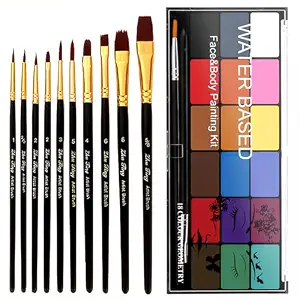
For one simple look, a small palette and the right brush can be more useful than a large box of unfamiliar effects supplies.
Oil-based or water-activated?
These formulas behave differently. Water-activated products need the right amount of water and are often selected for painted shapes. Oil-based palettes may need setting products and a compatible makeup remover. Follow the specific formula instructions rather than treating all palettes alike. Brushes and sponges may be sold separately.
Plan removal before you start
Read how the paint comes off, protect clothing and surfaces, and have the recommended remover ready. Follow any patch-test guidance and avoid use on irritated skin. Stop using a product if irritation develops. Never use craft paint as a substitute for makeup.
What to check in a kit
- Formula type, included colors and intended skin-use areas.
- Whether brushes, sponges or setting powder are included.
- Removal instructions and any ingredient sensitivities.
- Product condition, seller details and current delivery estimate.
Frequently asked questions
Do I need scar wax for a basic look?
No. Scar wax is for more specific effects. Start with a paint-only design if you want a simpler routine.
Can one palette make multiple looks?
Often, yes. Black, white and red are useful for several classic designs; additional colors add flexibility. Check the actual palette rather than relying on the product name.
Do I need to buy setting powder?
It depends on the formula. Follow the paint manufacturer’s directions instead of adding products automatically.